Your blog category

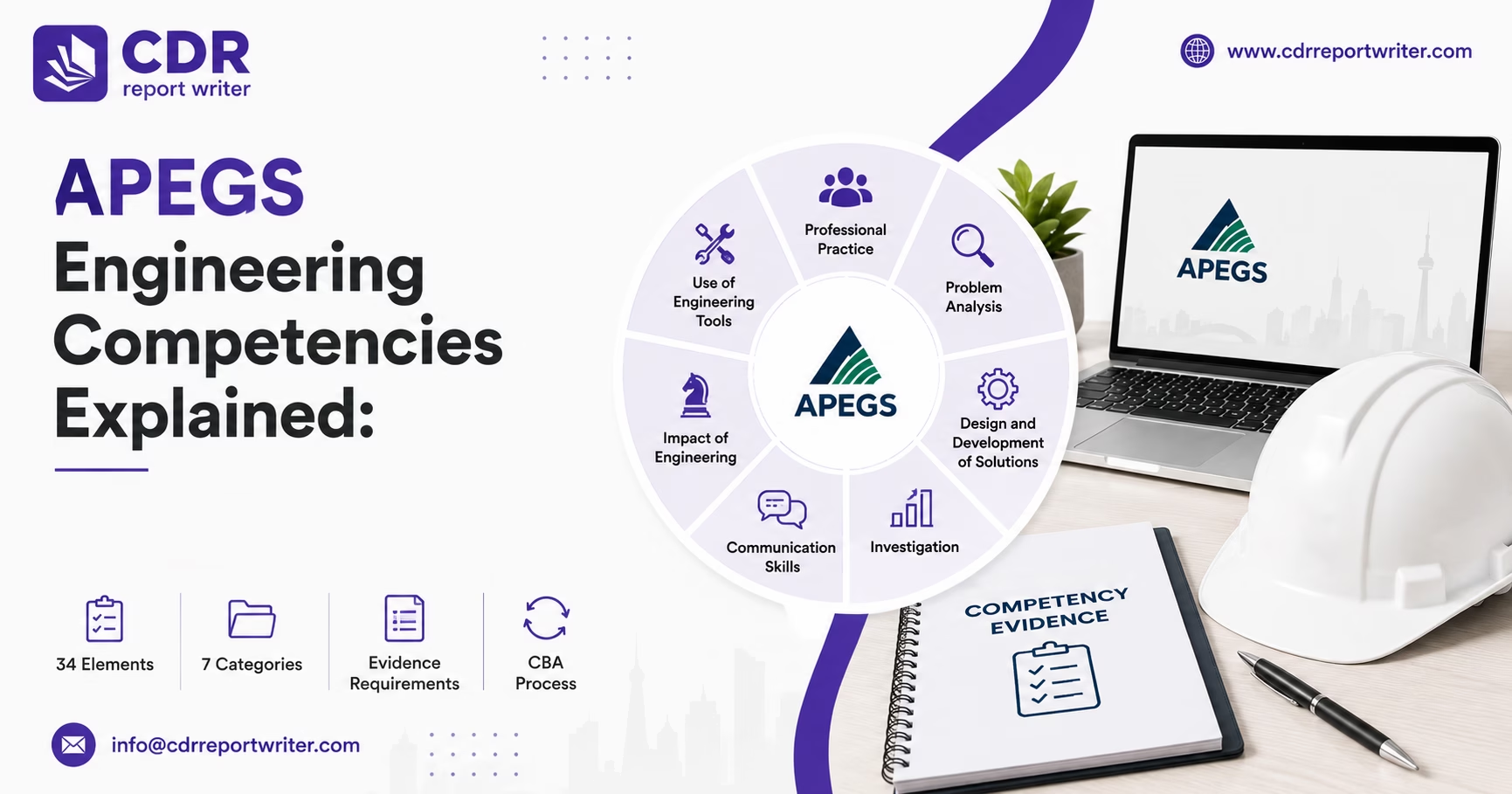
EngGeoMB CBA Guide: 34 Engineering Competencies, 7 Categories and Minimum Ratings

  • Post author:
  • Post category:Blog
  • Post comments:0 Comments

For many Manitoba P.Eng applicants, the EngGeoMB CBA becomes challenging when the official framework turns into 34 separate competency boxes to complete: rating levels, indicators, interpretation guidance, validators, and portal…

Continue ReadingEngGeoMB CBA Guide: 34 Engineering Competencies, 7 Categories and Minimum Ratings

APEGA’s 22 Engineering Competencies Explained: Six Categories, Indicators and Canadian-Environment Evidence

  • Post author:
  • Post category:Blog
  • Post comments:0 Comments

APEGA uses 22 engineering competencies to assess whether professional engineer and engineering licensee applicants are ready for professional practice. The competencies are grouped into six categories: Technical Competence, Communication, Project…

Continue ReadingAPEGA’s 22 Engineering Competencies Explained: Six Categories, Indicators and Canadian-Environment Evidence

APEGA Competency-Based Assessment Guide: CBAT, WRVL, 22 Competencies and the 2026 Process

  • Post author:
  • Post category:Blog
  • Post comments:0 Comments

An APEGA competency-based assessment is the work-experience evaluation used to decide whether an applicant has demonstrated the competence expected for professional practice in Alberta. For engineering applicants, the process connects…

Continue ReadingAPEGA Competency-Based Assessment Guide: CBAT, WRVL, 22 Competencies and the 2026 Process

EGBC Competency Report for Internationally Trained Engineers: WES, Foreign Experience and Canadian Context

  • Post author:
  • Post category:Blog
  • Post comments:0 Comments

Internationally trained engineers can use foreign experience in the EGBC competency report. In British Columbia, Canadian work experience is not automatically required for a BC P.Eng, and since July 1,…

Continue ReadingEGBC Competency Report for Internationally Trained Engineers: WES, Foreign Experience and Canadian Context

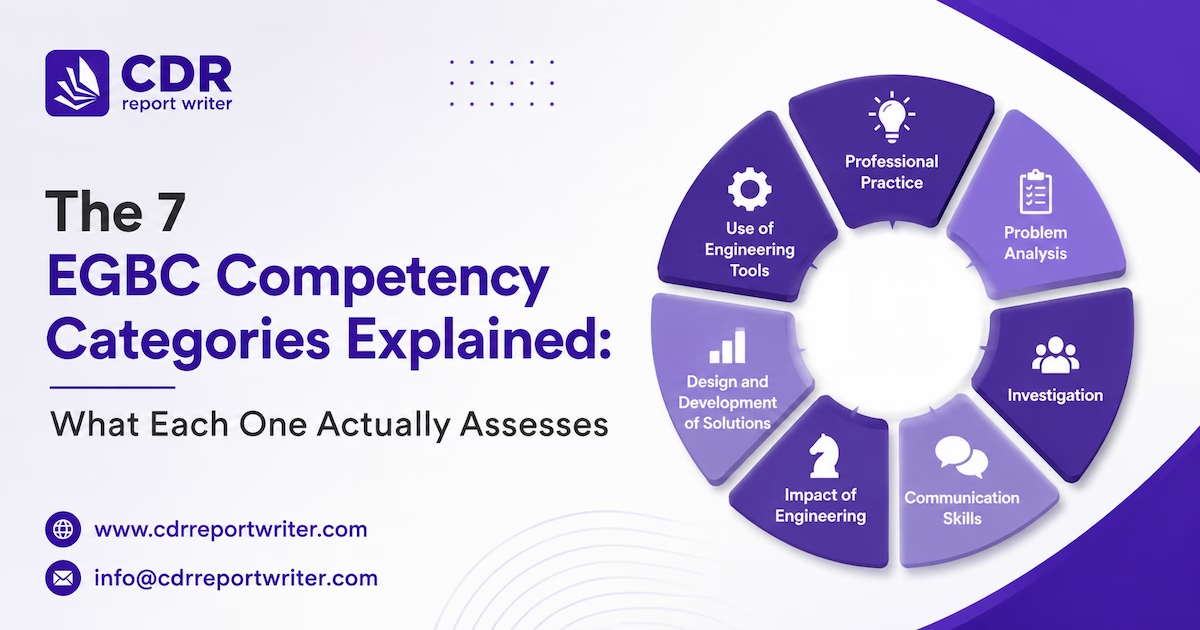
The 7 EGBC Competency Categories Explained: What Each One Actually Assesses

  • Post author:
  • Post category:Blog
  • Post comments:0 Comments

EGBC groups the 34 key competencies in its engineering competency-based assessment into 7 categories: Technical Competence (10 competencies), Communication (3), Project and Financial Management (5), Team Effectiveness (2), Professional Accountability…

Continue ReadingThe 7 EGBC Competency Categories Explained: What Each One Actually Assesses

What Is an EGBC Competency Report? Meaning, the 34 Competencies and How the System Works

  • Post author:
  • Post category:Blog
  • Post comments:0 Comments

An EGBC competency report is the competency-based assessment that Engineers and Geoscientists BC uses to review professional registration applicants. Instead of submitting only a chronological experience narrative, you map real…

Continue ReadingWhat Is an EGBC Competency Report? Meaning, the 34 Competencies and How the System Works

How to Write CMI Level 5 and Level 7 Assignments: Structure, Reflective Writing and Distinction-Level Tips

A successful CMI Level 5 or Level 7 assignment answers every assessment criterion directly, matches the depth of the command verb, uses evidence from your own workplace, and references sources…

Continue ReadingHow to Write CMI Level 5 and Level 7 Assignments: Structure, Reflective Writing and Distinction-Level Tips

 CDR Report for Electronics Engineer: ANZSCO 233411 Australia Guide

Preparing a Competency Demonstration Report (CDR) for an Electronics Engineer can feel challenging. Your projects may involve circuit design, embedded systems, signal processing, automation, testing, or electronic equipment development. Your…

Continue Reading CDR Report for Electronics Engineer: ANZSCO 233411 Australia Guide

What is the Competency Standards Stage 2 Skill Assessment for a Chartered Professional?

Professional engineers, regarded as talented, creative, and innovative for the growth of a nation, are offered chartered status. Being a Chartered Professional Engineer demonstrates a person’s responsibility, experience, talents, and…

Continue ReadingWhat is the Competency Standards Stage 2 Skill Assessment for a Chartered Professional?

Key Engineering Occupations in MLTSSL for CDR: A Pathway to Skilled Migration Through CDR

When it comes to engineering, the key occupations in the MLTSSL for CDR determine which occupations are eligible for skilled migration.  Inclusion of engineering occupations in the MLTSSL ensures that…

Continue ReadingKey Engineering Occupations in MLTSSL for CDR: A Pathway to Skilled Migration Through CDR

Complete Guide to Engineering in Australia 2023: Explore Career Prospects

Australia is renowned for its thriving engineering sector, offering numerous opportunities for both local and international professionals. With its advanced infrastructure projects, innovative research institutions, and strong industrial presence, engineering…

Continue ReadingComplete Guide to Engineering in Australia 2023: Explore Career Prospects

Engineers Australia Skills Assessment Guide: Pathways, Fees and Process

Are you unsure which Engineers Australia skills assessment pathway matches your qualification? Accreditation, occupation, and assessment categories can make the process difficult to understand. Selecting an unsuitable pathway can increase…
Continue ReadingEngineers Australia Skills Assessment Guide: Pathways, Fees and Process