
Imagine getting recognition for the skills and talent you have honed throughout your life in a country like Australia. Yes, it is possible if you follow an important step called the Migration Skills Assessment. It is like a test administered by the Migration authorities to determine if your skills align with what the country needs.
In this comprehensive guide, we’ll explain everything you need to know about the Migration Skills Assessment, the application process, its importance, and how to succeed in showcasing your capabilities.
What is a Migration Skills Assessment?
The Migration Skills Assessment is a crucial process for individuals seeking better opportunities and a brighter future in Australia. Consider it a test that assesses whether you possess the skills and qualities the country needs. This assessment determines if you possess the knowledge, professional experience, and qualifications that will further benefit the country in maintaining the quality and development of its working environment.
Different government bodies in Australia take this skills assessment, depending on the occupation you choose. For instance, Engineers Australia (EA) is an authority that conducts Migration Skills Assessments for Engineers only. The Australian Computer Society (ACS) is an authority that conducts skills assessments for IT professionals and others.
Main Purpose of Migration Skills Assessment
The primary purpose of the Migration Skills Assessment is to evaluate an individual’s skills, knowledge, experience, and professional achievements. It serves as a gatekeeper, ensuring that your capabilities and competencies align with the country’s requirements where you choose to work. All applicants must undergo this skills assessment to apply for Skilled Migration Visas or to seek employment in Australia.
Some other purposes of the Migration Skills Assessment and why it’s so important are:
- For matching the skills with the needs of the Australian working industry.
- Ensuring the quality and safety of the workers.
- For protecting the job market.
- For boosting confidence and creating more opportunities.
- For smoothing the immigration process for overseas workers.
How to Apply for Migration Skills Assessment?
The Migration Skills Assessment involves several steps and procedures that all applicants must understand. Firstly, the process begins with the submission of important documents, followed by academic certificates, employment history, and a language proficiency certificate. These are the basic processes upon which the assessment will be conducted. However, in the case of Australia, the process to apply for the Migration Skills Assessment is:
1. Search & Select Your Occupation
Begin by conducting thorough research about the specific requirements needed for your chosen occupation in Australia. Your first step should always be to ensure that your profession is on the Skilled Occupation list and that you meet the relevant criteria.
2. Choosing the Right Skills Assessment Authority
Australia has various skills assessment authorities, including Engineers Australia for Engineers, ACS for IT professionals, AIM for Management roles, and CPA for Accountants. So, choose the assessing authority that corresponds to your occupation.
3. Gathering Necessary Documents
Collect all the important documents such as your qualification certificates, work experience certificates, and language proficiency certificates. Documents such as transcripts, reference letters, CVs, and IELTS scores are also required to submit applications.
4. Online Application
Apply through the official web portal. Go to the website of the assessing authority you have chosen and submit your application online. However, you first need to create an account, fill out the required sections, and upload all of your documents mentioned above. Additionally, you are required to pay the specified application fee.
5. Verification and Assessment Outcome
After applying, the assessing authority will review & verify your documents. They ensure that all the information about the qualification & experience you mentioned is relevant to the profession and matches the Australian standards. This procedure takes some time, 2 to 5 weeks (average). If anything is missing or requires clarification, the authority will contact you for further processing.
6. Assessment Result
You will receive an email, which could be positive or negative. If it comes back positive, then you have passed the assessment test and are suitable for migration to Australia. Moreover, you will receive a migration skills assessment outcome letter, which can be used as part of the migration process.
Eligibility Criteria for Migration Skills Assessment
It is necessary to understand the eligibility criteria and the necessary qualifications for a successful Migration Skills Assessment for Australia. They are:
1. Your Chosen Profession Should be on the Skilled Occupation List
First and foremost eligibility criteria for skill assessment are that your profession must be on the skilled occupation list of Australia. In the occupation list, you can find the different occupations that are in high demand and indicate that your occupation is needed in the Australian Job market.
2. Relevant Qualifications Based on Chosen Occupation
You need to possess relevant qualifications that match the criteria of your chosen occupation. The assessing authority asks for the educational background and practical knowledge that aligns with the occupation you wish to practise in Australia.
3. Work Experience in the Chosen Occupation
Skill Assessment authorities require a minimum duration of work experience in the chosen occupation. This helps them to understand that you have practical knowledge & skills in your field.
4. Understanding the MSA Guidelines
Understanding the Migration Skill Assessment (MSA) applicant guidelines is necessary before you start your application process. There are separate procedures outlined for each occupation.
Popular Skill Assessment for Migration Authorities
Approved by the Australian Home Affairs, there are several Skills Assessment Authorities responsible for assessing different skilled occupations. Let’s learn about them all:
1. Engineers Australia Migration Skills Assessment
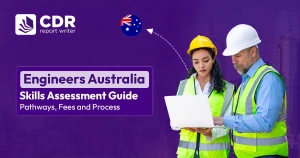
For Engineering in Australia, the assessing authority responsible for migration skill assessment of professional Engineering Candidates is Engineers Australia (EA). The EA’s evaluation process determines whether the applicant’s qualifications, experience, and skills meet the country’s engineering standards, making it a crucial step for those seeking opportunities in the field of Engineering in Australia.
The Engineers Australia Skills Assessment is widely recognised by most engineers who wish to migrate to Australia.
1.1 Engineering Australia Skill Assessment Pathways
Engineering Australia introduces two Pathways. They are:
Accredited Qualification Pathways: Accredited Qualifications are for those engineers who have taken education or courses from any of the following accreditation authorities:
- Australian Qualifications
- Washington Accord
- Sydney Accord
- Dublin Accord Qualification
Non-Accredited Qualification Pathways: Non-Accredited Qualifications are available for engineers who do not hold any accredited certificates from the authorities above. Therefore, they have to prepare a CDR Report. The Competency Demonstration Report is designed for non-accredited, qualified professionals, yet it gives equal importance to those of accredited, qualified candidates.
1.2 Engineers Australia Skills Assessment Requirements
- An Applicant must have completed at least a Bachelor’s degree in any engineering field.
- An Applicant must have at least three years of work experience in the chosen field.
- An Applicant must have skilled working ability at a professional level.
- An Applicant must have work experience in their nominated occupation.
1.3 Engineers Australia Skill Assessment Process
- Create an account and apply online through the official portal.
- Include important documents such as academic transcripts, employment certificates, and a CV for documentary evidence.
- Attach proof of English Language Proficiency ( IELTS).
- Pay the Skill Assessment Application fee to Engineers Australia.
1.4 Necessary Documents for Skills Assessment by Engineers Australia
- Academic Qualification Documents
- Proof of work or employment
- An updated Resume/CV
- English Language Proficiency Score (IELTS)
- Authorised Identification Proof
2. ACS Migration Skills Assessment
Australian Computer Society (ACS) is another authority that assesses the qualifications, skills, and work experience of information and communication technology (ICT) professionals. They conduct a Migration Skills Assessment process in which ACS evaluates professionals seeking migration to Australia under skilled migration visas, based on their capabilities in Information Technology. ACS Skills Assessment is a crucial step for ICT professionals looking to migrate to Australia and establish their careers in this field.
2.1 ACS Skills Assessment Requirements
- An Applicant must have completed at least a Bachelor’s Degree in any ICT field.
- An Applicant must have at least two years of work experience in the last ten years.
- An Applicant must have skilled working ability at a professional level.
- An Applicant must have work experience in their nominated occupation.
2.2 ACS Skill Assessment Process
- Create an account and apply online through the official ACS web portal.
- Include documentary evidence, such as academic transcripts, employment certificates, and a CV.
- Attach Proof of English Language Proficiency ( IELTS).
- Pay the Skill Assessment Application fee to ACS.
2.3 Necessary Documents for ACS Skill Assessment
- Academic Qualification Documents
- Proof of work or employment
- An updated Resume/CV
- English Language Proficiency Score (IELTS)
- Authorised Identification Proof
3. VETASSESS Migration Skills Assessment
Vocational Education and Training Assessment Service (VETASSESS) is an Australian skill assessment authority for engineers who have taken vocational education or training. It offers the freedom to choose from a wide range of engineering occupations across various industries. VETASSESS evaluates an engineer’s profile based on their education, work experience, technical skills, interpersonal skills, and other relevant skills required in the Australian Engineering Industry.
3.1 VETASSESS Skills Assessment Requirements
- An Applicant must have completed post-secondary education in any engineering field.
- An Applicant must have at least three years of work experience in the chosen field.
- An Applicant must have a skilled working ability on a professional level.
- An Applicant must have work experience in their nominated occupation.
3.2 VETASSESS Skill Assessment Process
- Create an account and apply online through the official VETASSESS web portal.
- Include documentary evidence, such as academic transcripts, employment certificates, and a CV.
- Attach Proof of English Language Proficiency ( IELTS).
- Pay the Skill Assessment Application fee to VETASSESS.
3.3 Necessary Documents for VETASSESS Skill Assessment
- Academic Qualification Documents
- Proof of work or employment
- An updated Resume/CV
- English Language Proficiency Score (IELTS)
- Authorised Identification Proof
Skills Assessment Authorities Other Than EA, ACS & VETASSESS
EA, ACS & VETASSESS hold the top three most popular Skill Assessment Authorities for Engineers & IT professionals. But what if your occupation is not an engineer or an IT specialist? Well, there are government authorities for other Skilled professionals too. Let’s learn about them:
1. TRA Migration Skills Assessment
Trades Recognition Australia (TRA) is a reputable skills assessment authority responsible for evaluating a candidate’s trade capabilities. Anyone as long as possesses trade skills overseas and wants professional recognition in Australia can apply for the TRA Migration Skill Assessment.
To be eligible for the TRA skill assessment, applicants must provide documentary evidence such as their trade qualifications, certificates, and educational transcripts. Furthermore, it is also required to submit work experience letters such as contracts, reference letters, and job descriptions.
2. AIM Migration Skills Assessment
The Australian Institute of Management Skill Assessment is an authorised organisation that focuses on providing professional development, training, and education services to individuals & organisations in Australia. AIM conducts a skills assessment for senior-level managerial occupations. Those with exceptional talents in Management roles, possessing relevant education, skills, and experience in domains such as leadership, project management, human resources, and marketing, can apply for the AIM Migration Skills Assessment.
3. CPA Migration Skills Assessment
Certified Practising Accountants (CPA) is an Australian authority that conducts a skills assessment process to evaluate the qualifications and skills of individuals seeking migration to Australia and work in accounting or related fields. CPA is responsible for assessing the skills of overseas-trained professional accountants to evaluate whether they are capable of not for Skilled Migration Visas in Australia.
4. CAA NZ Migration Skills Assessment
Previously known as the Institute of Chartered Accountants in Australia (ICAA), it merged to form a newly established institute, “Chartered Accountants and New Zealand (CAA NZ)”. This newly formed organisation operates under a Royal Charter and is affiliated with the New Zealand Institute of Chartered Accountants. CAA NZ conducts migration skill assessment for applicants who wish to be labelled as Chartered Accountants and want access to a wide range of opportunities in Australia.
5. AACA Migration Skills Assessment
The Architects Accreditation Council of Australia (ACCA) is responsible for assessing the skills and competency of overseas architects. The evaluation process is based on the skills, academic qualifications, and architectural field experience.
List of Occupations and Their Skills Assessment Bodies
| Occupation | Skill Assessment Body |
| Engineers | Engineers Australia |
| Information Technology | Australian Computer Society (ACS) |
| Nurses and Midwives | Australian Nursing and Midwifery Accreditation Council (ANMAC) |
| Accountants | Chartered Accountants Australia and New Zealand (CA ANZ) |
| Business Professionals | Institute of Managers and Leaders (IML) |
| Pharmacists | Australian Pharmacy Council (APC) |
| Teachers | Australian Institute for Teaching and School Leadership (AITSL) |
| Social Workers | Australian Association of Social Workers (AASW) |
| Medical Practitioners | Australian Medical Council (AMC) |
| Physiotherapists | Australian Physiotherapy Council (APC) |
| Occupational Therapists | Occupational Therapy Council of Australia (OTC) |
| Electricians | Trade Recognition Australia (TRA) Approved Registered Training Organisation (RTO) |
| Chefs | Trade Recognition Australia (TRA) |
| Welders | Trade Recognition Australia (TRA) Approved Registered Training Organisations (RTOs) |
| Hairdressers | Trade Recognition Australia (TRA) |
| Automotive Mechanics | Trade Recognition Australia (TRA) |
| Carpentry and Joinery | Trade Recognition Australia (TRA) |
| Plumber | Trade Recognition Australia TRA-approved registered training organisation (RTO) |
| Electrician | Trade Recognition Australia (TRA)-approved registered training organisation (RTO) |
| Bricklayer | Trade Recognition Australia (TRA)-approved registered training organisation (RTO) |
Things to Consider Before Applying for the Migration Skills Assessment
1. A Verification Check with the Australian Department of Home Affairs
Always remember to do a verification check with the official Department of Home Affairs to confirm whether you need a Skills Assessment for your chosen Visa application. Based on the occupation, there are different Visa subclasses with their requirements. Thus, it is essential to confirm beforehand whether a skills assessment is required for your chosen visa category.
2. Choose the Assessing Authority Based on Your Occupation
Choosing the right authority that relates to your occupation is important. As there are different assessing authorities for each professional field, choosing & confirming the one that is the right fit for your field is essential.
What are the Migration Skill Assessment Fees?
Different Migration Skills Assessors have set their assessment fees. However, on average, a complete Migration Skills Assessment costs $AUD 795, whereas a Migration Skills Assessment Review costs $AUD 610.
Common Challenges You Might Face During Skills Assessment
Immigration skills assessment for Australia can be a complex and complex process, especially for individuals who wish to immigrate to Australia based on their skills and qualifications. Here are some common challenges applicants face when conducting a migration skills assessment:
Document verification and authenticity: It is important to provide authentic and verifiable documents. Ensuring that all your educational and employment documents are accurate and accurately represent your qualifications and experience can be a challenge, especially if you have studied or worked in multiple countries.
Recognised skills: Your skills may not always align perfectly with the professional categories recognised by the Australian Bureau of Standards. Matching your skills and the specific job that best suits your situation can be challenging.
Changes in the job listings: Australia’s qualified workforce roster could be fluid owing to labour market demands and policy shifts. A job that used to be one that you could relocate to may no longer qualify, which can affect your immigration plans.
Different inspection procedures: Different inspection authorities have their procedure and guidelines. Knowledge of these requirements can make it difficult to ensure conformity with the standards required by your particular reviewing officer.
Experience check: At times, senior reviewers require specific work experience in your chosen field. Accounting for this experience accurately and knowledgeably can prove difficult given past working patterns or country of work assignment.
English proficiency: Most skilled immigration routes require a demonstration of English proficiency through language tests, such as the IELTS or PTE. The scoring requirements can be challenging for some applicants, especially if English is not their first language.
Recognition of qualifications: Your qualifications may not be recognised directly by a reviewing authority, requiring further assessment, testing, or bridging courses to meet Australian standards
Immigration Law changes: Immigration policies and laws may change, affecting skills assessment requirements. Staying abreast of these changes and adjusting your application accordingly can be challenging.
Financial Costs: Assessing skills may involve financial requirements and other associated costs related to migration. This can be particularly challenging for aspiring entrepreneurs on tight budgets.
Time constraints: The skills assessment process can be time-consuming, potentially delaying your entire immigration process. Meeting deadlines, gathering essential documents, and preparing surveys within a specific timeframe can be challenging.
Lack of guidance: Understanding the complexities of the skills assessment process can be difficult, and some industries may have few official guidelines in place. Applicants may need to rely on online forums, communities, or professional immigration counsel to assist.
Appeals and investigations: If the outcome of your competency assessment is not as expected, navigating the appeals and investigation process can be challenging, often requiring the assistance of a lawyer or professional.
Visa Categories to Apply for the Migration Skills Assessment
Based on the occupation, there are different Visa Categories for the Migration Skills Assessment:
General Skilled Migration (GSM): Common Visa for Skilled Immigrants who want to migrate to Australia as skilled professionals.
Visas sponsored by employers (Sponsorship Visa): A type of visa in which an employer invites an overseas professional to get employment in Australia.
Temporary Skill Shortage visa (TSS): A visa that allows skilled workers from all over the world to work in their nominated occupation for up to four years.
Temporary Graduate visa (subclass 485): A type of Visa that lets you live, work, and study in Australia temporarily.
Tips to Choose the Right Skills Assessment Authority
You may already be familiar with the Migration Skills Assessments, including how to apply for them, their eligibility criteria, and the assessing authorities based on the occupation. Let’s give you some best tips to choose the Right Skills Assessment Authority:
Check Your Occupation: Different Skill Assessment Authorities Assess Different Occupations. Therefore, ensure that the authority you choose is responsible for assessing your chosen occupation.
Accreditation & Official Approval: Always check the official website of the relevant authority to confirm whether the Australian Government authorises them. This ensures that the procedures and assessments they suggest are in accordance with the official rules.
Assessment Processing Time: The processing time for skill assessments varies according to the assessment authority. As a result, it is advisable to check the estimated processing time at the official website of an authority before applying through them.
Assessment Guidelines & Criteria: It is advised to review the assessment eligibility criteria & guidelines provided by your chosen Skill Assessment Authority. Ensure that you can meet & follow all the guidelines that are necessarily required to support your application.
Pathway to Permanent Residency: Lastly, always consider your long-term plans when choosing the assessment authority. If your goal is to get a permanent residency (PR) working as a Skilled Professional in Australia, make sure the chosen Assessment authority is aligned with that of your migration goal.
Conclusion
Obtaining a skill assessment is crucial if you want to migrate to Australia as a skilled worker. For this, various assessment authorities, such as the Australian Computer Society, Engineers Australia, and VETASSESS, have their guidelines and rules to assess your proficiency level. Thus, picking the right one is key to a successful assessment of your occupation.
Here at CDR Report Writer, we will guide you step-by-step in your Migration Skill Assessment to Australia. Our top experts will help you create a strong Competency Demonstration Report (CDR) along with the skills and qualifications you need. We are your partners in making your dream of migration to Australia as a Skilled professional a reality.
FAQs
Who is eligible to apply for a Migration Skills Assessment?
Professionals, such as engineers, IT specialists, chartered accountants, and business experts who possess both skills and experience in their field, can apply for an MSA. There are various types of visas for different occupations, including General Skilled Migration (GSM) visas, Employer Sponsored Visas, Temporary Skill Shortage (TSS) visas, and Temporary Graduate Visas.
How long does the TRA Migration Skills Assessment take to process?
It takes around 120 days from the date of submission to finalise the TRA Migration Skills Assessment. However, the processing time may vary depending on the volume of applications received and the complexity of the verification process required.
What happens if a General Skills Assessment gets rejected?
In case your General Skills Assessment gets rejected, this means there is something wrong with your skills assessment application form. The assessment authority may then ask you to resubmit the application, following the proper guidelines that meet the required skills assessment standards.