

Migration to Australia for ICT professionals requires more than strong technical experience. Australian Computer Society (ACS) checks how your duties match your nominated ANZSCO code and claimed work history. Your employment letters must show clear ICT tasks, paid work, dates, hours, and employer details.
If your ACS pathway, documents, points score, and visa option do not align, your plan becomes weaker. Start with a clear profile review before choosing your skilled migration pathway.
In this blog, you will learn about key visa pathways, ACS requirements, RPL, document needs, migration costs, city options, and common mistakes to avoid in 2026.
Key Takeaways
- Australia gives ICT professionals career options across technology-driven industries, along with skilled visa routes and long-term settlement benefits.
- Subclass 482, 186, 189, 190, and 491 support different migration goals, including employer sponsorship, permanent residency, state nomination, and regional pathways.
- Your migration eligibility depends on how your age, English score, ICT work history, ANZSCO occupation, skills assessment, and budget support your visa pathway.
- ACS Skills Assessment checks whether your qualification, paid ICT experience, and selected ANZSCO code match the occupation you plan to nominate.
- Australian job market research helps you compare target roles, city demand, salary expectations, sponsorship options, and skill gaps before migration.
- ICT professionals may face visa rule changes, ACS concerns, document gaps, job market uncertainty, upfront costs, and strong competition during migration planning.
Why do ICT Professionals Choose Australia for Migration?
Many ICT professionals see Australia as a place to grow their careers, earn better, and build a stable future. Better lifestyle benefits, skilled visa options, and recognised assessment pathways make Australia a practical choice for building a stable career and future abroad.
- Strong Technology Job Market: Banks, hospitals, schools, logistics firms, government teams, and large companies use digital systems to run daily work. This creates more roles for professionals who understand cloud platforms, data systems, cyber security, automation, and business technology.
- Skilled Migration Options: Eligible applicants can explore points-tested, nominated, regional, or employer-sponsored visa routes. These pathways give experienced professionals different ways to plan temporary or permanent relocation.
- Recognised ACS Assessment Pathway: ACS gives applicants a formal process to show their qualifications and work history for migration. It checks whether your background supports the ANZSCO occupation you select.
- Career Options Across Major Cities: Sydney, Melbourne, Brisbane, Perth, Adelaide, Canberra, and regional areas offer different work markets. You can compare locations by job availability, salary range, living cost, industry focus, and nomination options.
- Competitive Pay for Skilled Roles: Salaries depend on role type, experience level, certification, city, and employer. Experienced professionals can earn better in areas linked to software, cloud, data, cybersecurity, and business systems.
What are the Main Visa Pathways for ICT Professionals in Australia?
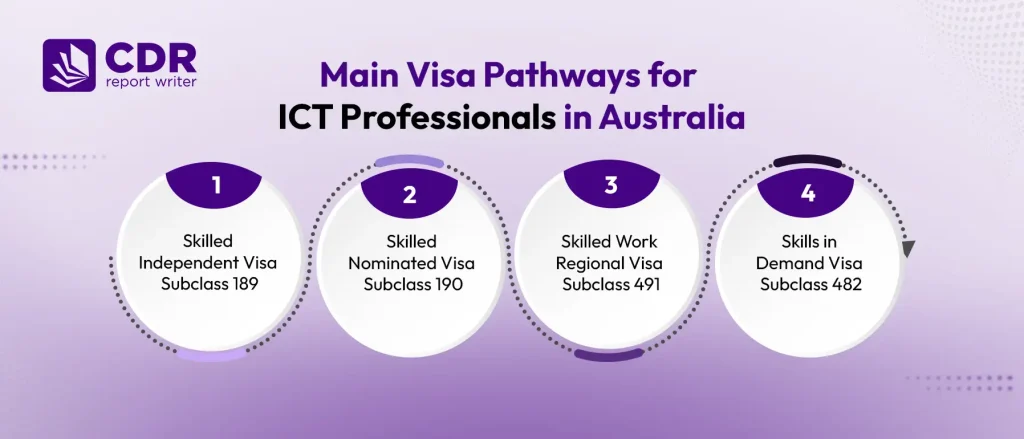
When planning migration to Australia as an ICT professional, you can choose from key visa pathways such as Subclass 482, 186, 189, 190, and 491. Your right option depends on your sponsorship, nomination, points score, occupation, and settlement goal.
1. Skills in Demand Visa Subclass 482
The Skills in Demand Visa Subclass 482 can suit you when an approved Australian employer offers you a skilled ICT role. It helps you work in Australia through employer sponsorship while you build local experience.
- Stay: Up to 4 years, depending on the stream and visa conditions.
- Cost: From AUD3,210 for the Core Skills stream.
- Key benefits: You can work for your approved sponsor in the nominated role. You can also study without government support and travel in and out of Australia while the visa remains valid.
2. Employer Nomination Scheme Visa Subclass 186
If you want an employer-backed permanent pathway, the Employer Nomination Scheme Visa Subclass 186 can be a strong option. It applies when an Australian employer nominates you for a skilled full-time role.
- Stay: Permanently.
- Cost: From AUD4,910 for the main applicant.
- Key benefits: You can live, work, and study in Australia as a permanent resident. You can access Medicare, sponsor eligible relatives, and apply for citizenship after meeting the rules.
3. Skilled Independent Visa Subclass 189
The Skilled Independent Visa Subclass 189 gives you more freedom because it does not depend on employer, state, or territory sponsorship. It suits invited applicants with a suitable occupation and competitive points score.
- Stay: Permanently.
- Cost: From AUD4,910 for the main applicant.
- Key benefits: You can choose where to live, work, and study in Australia. You can also access permanent resident benefits, sponsor eligible family members, and apply for citizenship if eligible.
4. Skilled Nominated Visa Subclass 190
State or territory nomination makes the Skilled Nominated Visa Subclass 190 different from the independent pathway. It can suit you when your occupation and profile match the needs of a specific Australian state or territory.
- Stay: Permanently.
- Cost: From AUD4,910 for the main applicant.
- Key benefits: You can live, work, and study in Australia as a permanent resident. You should also follow the settlement expectations of the state or territory that nominates you.
5. Skilled Work Regional Visa Subclass 491
The Skilled Work Regional Visa Subclass 491 works best when you are open to building your career outside major metropolitan areas. It gives you a provisional pathway through regional nomination or eligible family sponsorship.
- Stay: Up to 5 years.
- Cost: From AUD4,910 for the main applicant.
- Key benefits: You can live, work, and study in a designated regional area. You can travel while the visa remains valid and apply for permanent residence later if you meet the required conditions.
What Factors Affect ICT Migration Eligibility in Australia?
Your eligibility for migration to Australia for ICT professionals depends on how well your profile fits skilled migration rules. Your age, points score, English result, work history, occupation choice, skills assessment, and budget all help decide the right pathway.
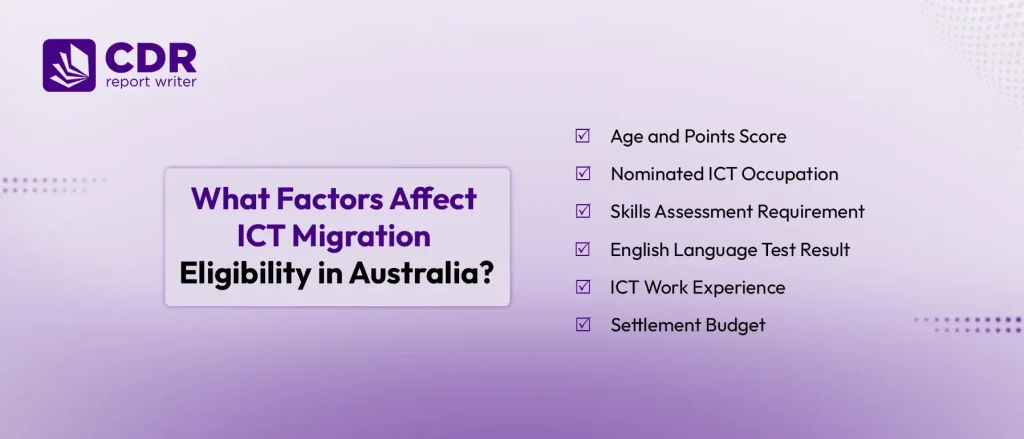
1. Age and Points Score: Check your age and calculate your points before choosing a skilled visa pathway. Your score can change based on your age, English level, qualification, work experience, partner points, and nomination.
2. English Language Test Result: Use your English test result to strengthen your visa profile. A higher score can add more points and improve your position in competitive invitation rounds.
3. ICT Work Experience: Prove your paid ICT experience with clear employment records. Your documents should show your role, duties, work dates, weekly hours, employer details, and payment evidence.
4. Nominated ICT Occupation: Choose the ICT occupation that matches your main technical duties and project responsibilities. Your ANZSCO code should reflect the systems, tools, tasks, and outcomes you handled, not just the job title on your employment letter.
5. Skills Assessment Requirement: Complete the skills assessment required for your selected occupation. For many ICT roles, ACS checks your qualification, duties, and paid work history against your nominated ANZSCO code.
6. Settlement Budget: Plan your budget for visa fees, ACS assessment, English tests, document preparation, travel, rent, and early living costs. A clear budget helps you manage the first stage of migration without financial pressure.
What Role Does ACS Skills Assessment Play in ICT Migration?
ACS Skills Assessment helps ICT professionals turn their qualifications and work experience into recognised evidence for Australian skilled migration. It connects your education, employment history, ANZSCO code, and assessment pathway.
1. ACS Assessment for ICT Occupation Validation: ACS compares your education, duties, and paid work history with your selected occupation. This helps you show that your background fits the role you want to nominate for migration.
2. ANZSCO Code Selection for ICT Professionals: Choose an ANZSCO code that reflects your main technical duties, tools, systems, and project responsibilities. Avoid selecting a code based only on your job title.
3. Employment Evidence for ICT Work Experience: Use employment evidence that proves your paid ICT work for the period you claim. Your records should show your role, duties, dates, weekly hours, employer details, and payment proof where required.
4. RPL Pathway for Non-ICT Qualification Holders: Use the RPL pathway when your qualification does not closely match ICT requirements. Your project reports should explain your technical tasks, decisions, tools, and problem-solving work.
How Should ICT Professionals Review the Australian Job Market Before Migration?
Before choosing a visa pathway, look at where your ICT skills actually fit in Australia’s job market. Job ads, city demand, salary ranges, sponsorship options, and required tools can help you plan migration with clearer direction.
1. Australian ICT Job Role Match: Compare your current duties with Australian job ads for the same or closely related roles. Check whether employers ask for similar tools, certifications, project experience, industry knowledge, and daily responsibilities.
2. City-Wise ICT Job Demand: Review job listings across Sydney, Melbourne, Brisbane, Perth, Adelaide, Canberra, and regional areas. Each location can offer different role volumes, salary ranges, employer types, living costs, and state nomination options.
3. Employer Sponsorship Opportunities: Check whether employers in your target field sponsor overseas applicants. This matters if you plan to use the Skills in Demand Visa Subclass 482 or Employer Nomination Scheme Visa Subclass 186.
4. Australia-Focused Resume and LinkedIn Profile: Prepare your resume and LinkedIn profile before applying for roles. Show your technical skills, project results, tools used, certifications, and measurable outcomes in a format Australian recruiters can scan quickly.
5. ICT Skill Gap Review: Compare your skills with the requirements shown in Australian job ads. Look for repeated mentions of cloud platforms, cybersecurity tools, data systems, automation, agile delivery, and business analysis methods.
6. Salary and Living Cost Comparison: Compare the expected salary with rent, transport, tax, insurance, and early settlement costs in your target city. This helps you choose a location that supports both your job search and migration budget.
Need help with ACS documents?
Talk to an expert and review your ACS evidence before submission.
What Challenges Do ICT Professionals Face While Migrating to Australia?
Even strong ICT experience cannot remove every challenge across planning, assessment processing time, visa selection, and settlement. You may need to handle visa rule changes, ACS issues, document gaps, job market shifts, upfront costs, and skilled pathway competition during the process.
1. Changing Visa and Nomination Rules: Occupation lists, state nomination rules, and invitation trends may change while you prepare your application. These updates can affect the visa pathway you planned to follow.
2. ACS Assessment Issues: ACS may raise concerns if your qualification, work history, or selected occupation does not match clearly. A weak match can affect how your ICT profile supports the nominated role.
3. Weak Employment Evidence: Reference letters with broad duties, missing dates, unclear hours, or limited payment proof can create document gaps. These gaps can make paid ICT experience harder to verify.
4. Job Market Uncertainty: Demand for your target role may differ across Australian cities, industries, and experience levels. Some applicants find fewer suitable roles than expected after checking real job listings.
5. Settlement Cost Pressure: Visa fees, assessment fees, English tests, travel, rent bond, temporary housing, and early living costs can increase your upfront budget. These costs can create pressure before stable income starts.
6. Strong Competition for Skilled Pathways: Many qualified applicants compete for invitations, nominations, and sponsored roles. Even a strong ICT profile can face delays when demand for a pathway is high.
Frequently Asked Questions
1. Is Australia Good for ICT Professionals in 2026?
Yes, Australia can suit ICT professionals with relevant skills, clear work evidence, and an appropriate visa pathway. It offers opportunities across technology-driven industries, skilled migration pathways, and long-term settlement options.
2. Can ICT Professionals Migrate to Australia Without a Job Offer?
Yes, ICT professionals can migrate without a job offer through points-tested visas such as Subclass 189, 190, or 491. Applicants must still meet occupation, points, skills assessment, and invitation requirements.
3. Which Visa Is Best for ICT Professionals in Australia?
The best visa depends on your profile. Subclass 482 suits employer-sponsored applicants, while Subclass 186 supports employer-nominated permanent residence. Subclass 189, 190, and 491 apply to points-tested migration pathways.
4. Do ICT Professionals Need an ACS Skills Assessment for Australian Migration?
Many ICT professionals need an ACS Skills Assessment when ACS assesses their nominated occupation. ACS reviews whether your qualifications, employment history, and duties support your selected ANZSCO code.
5. Can You Migrate to Australia as an ICT Professional Without an ICT Degree?
Yes, some ICT professionals may qualify without an ICT degree when their work experience supports the required assessment pathway. ACS RPL may apply when a qualification does not closely meet ICT requirements.
6. How Many Points Do ICT Professionals Need for Australian PR?
Points-tested skilled visas generally require at least 65 points to submit an Expression of Interest. A higher score may strengthen your position during competitive invitation rounds.