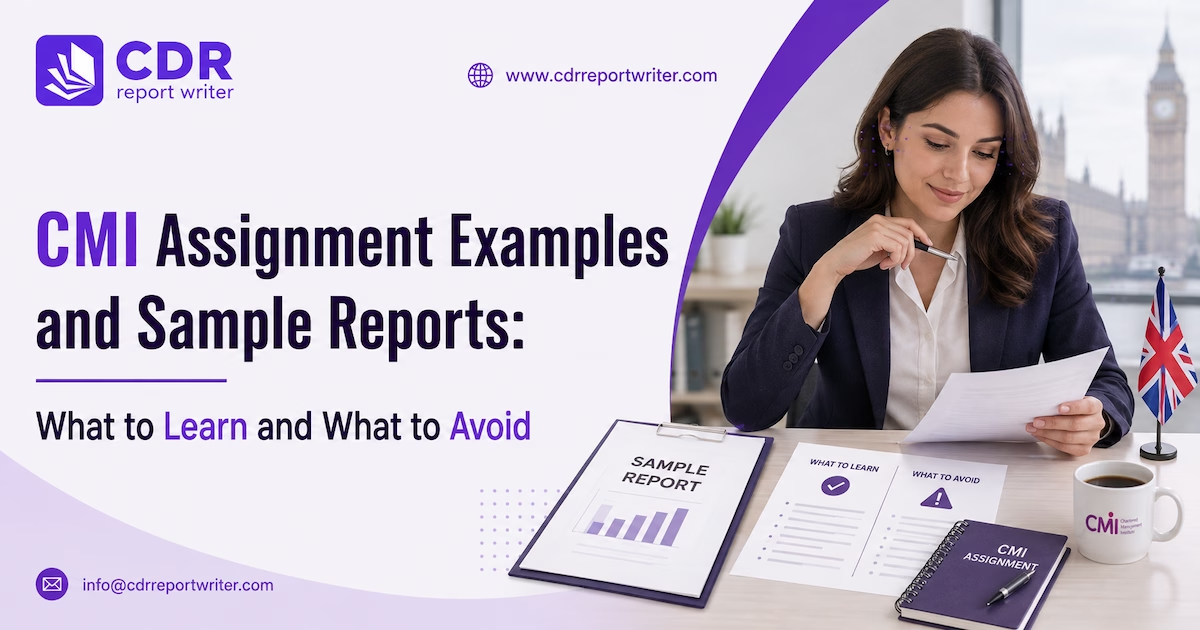
A good CMI assignment example should show structure, depth, referencing, and workplace application. It should help you understand how a management report, briefing paper, or strategic appraisal is built. It should not become text you copy, lightly rewrite, or submit as your own work.
That distinction matters because many search results for CMI assignment examples are commercial services selling finished or ghostwritten answers. Using that kind of content as your own work can create academic misconduct risk, referral risk, and professional reputation risk.
This guide explains what to learn from examples, what to avoid, and how to review your own draft safely. For official qualification context, use CMI sources such as CMI qualifications explained and relevant CMI student guidance rather than paid sample-answer sites.
Key Takeaways
- Use CMI examples to learn structure and depth, not to copy content.
- Strong examples make command-verb depth visible: discuss, evaluate, critique, and justify are not the same as describe.
- A genuine example follows the task brief format, such as a management report, briefing paper, or strategic appraisal.
- Referencing should support the analysis directly, not appear as a disconnected list at the end.
- Your own workplace context is essential because CMI assessment is tied to your management practice and evidence.
Quick Answer: What Should a Good CMI Assignment Example Show You?
A good CMI assignment example should show command-verb depth, correct task formatting, integrated Harvard-style referencing, disciplined word-count use, and clear workplace application. It should help you see how an answer is organised and evidenced. It should never be used as content to copy, paraphrase, or submit, because CMI assignments must represent your own work and management evidence.
If an example looks like a finished answer written for submission, treat it cautiously. The safest use is structural: observe headings, depth, evidence placement, and referencing style, then write your own response from your own brief and workplace context.
Want Your Own Draft Reviewed Against the Assessment Criteria?
We can help review structure, criteria coverage, evidence clarity, and command-verb depth in your own original draft.
Why Are Most CMI Assignment Example Search Results Risky to Use?
Many CMI assignment example pages are not neutral learning resources. They are commercial pages offering finished samples, model answers, or writing services.
The risk is not only that the example may be low quality or outdated. The larger risk is that a candidate may copy, closely paraphrase, or build a submission around content that is not their own. That can lead to academic integrity concerns, referral, invalidated results, or reputational harm.
This is especially important for managers using CMI qualifications as part of a professional development or Chartered Manager pathway. Your written evidence is tied to your name, role, decisions, and career. A borrowed answer cannot prove your professional competence.
What Does a Genuine, Well-Structured CMI Assignment Demonstrate?
A genuine example is useful only when it teaches you how the work is built. The best examples reveal the relationship between the brief, assessment criteria, evidence, references, recommendations, and reflection.
Command-Verb Depth Is Visible in the Writing
A strong example makes the command verb obvious. If the brief asks you to evaluate or critique, the answer weighs evidence and reaches a judgement. For a deeper command-verb method, use our guide on how to write CMI Level 5 and Level 7 assignments.
Formatting Matches the Task Brief
A genuine example follows the expected format. A management report should not read exactly like a reflective journal. A briefing paper should be concise and decision-focused. A strategic appraisal should show analysis, options, and judgement.
Referencing Is Integrated, Not Bolted On
Harvard-style references should support specific claims in the analysis. A weak example drops references at the end without showing how those sources influenced the argument, recommendation, or judgement.
Word Count Is Used Deliberately
Good examples use the word count to meet criteria. They do not pad with generic theory, and they do not cut essential evidence. A short, precise paragraph can be stronger than a long paragraph that never answers the command verb.
What Do Common CMI Unit Examples Usually Look Like?
The examples below are illustrative only. Unit numbers, titles, and task formats can change between CMI syllabus versions, providers, and cohorts. Always follow your own current assignment brief first.
| Level and unit | Typical focus area | Typical task format |
| Level 3, e.g. Unit 331 | Introductory management principles and first-line management practice | Short report, workbook-style task, or applied written response |
| Level 5, e.g. Unit 501 | Principles of management and leadership | Written management report linked to practical workplace evidence |
| Level 5, e.g. Unit 503 | Managing and leading individuals and teams | Case-study analysis, team leadership account, or applied management report |
| Level 5, e.g. Unit 525 | Reflective practice and personal development | Briefing paper, reflective account, and personal development plan |
| Level 7, e.g. Unit 702 | Leading and developing people at strategic level | Strategic appraisal, proposal, or evaluative leadership report |
CMI official materials, including the Level 5 Sample Student Guide PDF, emphasise learning outcomes, workplace application, planning for assessment, and learner capability at the correct level. Use that principle when judging any example.
If your sample relates to reflective practice or personal development, add the future internal link here: CMI Reflective Reports Explained: How to Write Reflective Practice Evidence.
Publisher note: add the final Blog 11 internal link after the slug is confirmed.
How Can You Critique Your Own Draft Like an Assessor Would?
The best use of examples is to create a self-review checklist for your own draft. Compare your work against structure and evidence, not against someone else’s wording.
- Have you matched each command verb, rather than only writing about the topic generally?
- Does your structure mirror the task brief, task format, learning outcomes, and assessment criteria?
- Can the assessor find every required answer without searching through unrelated paragraphs?
- Does each citation support a specific point in your argument or recommendation?
- Have you used your own workplace context, data, decisions, and reflections?
- Are your recommendations specific, realistic, and linked to the evidence?
- Have you stayed within the word count without removing content needed to meet a criterion?
If your draft fails one of these checks, do not solve it by copying an online sample. Go back to the brief and improve your own evidence trail.
Not Sure If Your Draft Meets the Required Depth?
A criteria-focused review can help identify whether your own draft has the right structure, evidence, references, and command-verb depth.
What Should You Avoid When Looking at CMI Assignment Examples Online?
The safest rule is: learn structure from examples, never content. Online samples can show format, but they cannot prove your own competence.
- Do not copy, lightly rewrite, or submit a third-party sample answer as your own work.
- Do not assume an online example matches your unit version, provider template, or current assessment criteria.
- Do not trust examples that avoid real workplace application and rely only on generic theory.
- Treat phrases such as written by our writers, complete answers, ready-made samples, or guaranteed pass as warning signs.
- Do not use old samples as proof of current unit requirements. CMI syllabuses and provider briefs can change.
- Do not let an example replace your own judgement, reflection, or professional evidence.
The qualification is part of your professional record. Integrity issues can matter far beyond one assignment submission.
Get Genuine Feedback on Your Own Work, Not a Ghostwritten Answer.
Our support is focused on structure, criteria mapping, evidence clarity, and feedback on your own draft, not supplying finished answers.
This keeps the example in the right role. It helps you understand expectations without letting another person’s answer become the foundation of your own submission.
- After reviewing, close the example and revise your assignment from your own notes and evidence.
- Use the example to spot missing sections in your draft, not to borrow paragraphs.
- Observe how references support analysis, then build your own reference trail from sources you have actually used.
- Notice how evidence is introduced, but replace every scenario with your own workplace evidence.
- Identify the command verbs used in the example, but answer the command verbs in your own criteria.
- Check the example’s heading pattern, then compare it with your own assignment brief.
A safe review process looks like this:
Use an example as a map, not as material. The safest approach is to separate the example’s structure from its content, then rebuild the answer from your own brief, evidence, workplace context, and references.
How Should You Use a CMI Example Safely?
That is why examples should always sit below the brief in priority. Your brief, syllabus, provider instructions, and feedback control the submission. An example is only a learning aid.
A sample report cannot tell you whether your own work meets the current brief. It cannot supply your workplace context, your decision-making evidence, your reflection, or your assessor’s current criteria. It also cannot prove that its unit number, title, or task format still matches your cohort.
A sample report can show how a finished piece may be organised. It can demonstrate how headings, subheadings, evidence, recommendations, and references fit together. It can also show whether the expected output is closer to a management report, a briefing paper, a reflective account, or a strategic proposal.
What Can a CMI Sample Report Tell You – and What Can It Not Tell You? Is It Ever OK to Look at CMI Assignment Examples at All?
Yes, but only for structural learning. It is reasonable to look at examples to understand how headings are organised, how evidence supports a point, how recommendations are framed, and how references appear in context.
It is not acceptable to use a found or purchased answer as the basis for your submission. Even close paraphrasing can be risky if the argument, evidence, and structure are not genuinely yours.
If you are still choosing the right qualification level, read our CMI Level 5 vs Level 7 comparison. If your main issue is writing method rather than sample use, read our CMI assignment writing guide.
Ready to Strengthen Your Own CMI Assignment Before You Submit?
Use feedback to improve your own evidence, structure, and clarity before submission.
Frequently Asked Questions
1. What Does a Good CMI Assignment Example Actually Look Like?
A good example shows clear headings, command-verb depth, workplace evidence, integrated referencing, and recommendations linked to the brief. It should demonstrate structure and depth, not provide text to copy.
2. What Should I Avoid When Using CMI Assignment Examples Found Online?
Avoid copying, close paraphrasing, relying on outdated unit details, and using examples that are sold as ready-made answers. Use examples only to understand structure.
3. Is It Safe to Use a CMI Assignment Sample or Answer Found on a Website?
It is only safe as a learning reference for structure. It is not safe to submit, rewrite, or build your answer around someone else’s sample content.
4. Can I Get in Trouble for Submitting a CMI Assignment Example as My Own Work?
Yes. Submitting copied, purchased, or ghostwritten work can create academic misconduct risk, referral risk, and professional reputation risk.
5. What Is CMI Unit 501 About?
Unit 501 is commonly associated with principles of management and leadership, but unit titles and formats should always be checked against your current CMI syllabus and provider brief.
6. What Is CMI Unit 525 About?
Unit 525 is commonly associated with reflective practice and personal development. Confirm the exact title, task format, and evidence requirements against your current assignment brief.
7. Where Can I Find Genuine, Trustworthy CMI Assignment Guidance?
Start with CMI official qualification pages, your provider’s assignment brief, your unit syllabus, and feedback from your tutor or assessor. Use commercial sample-answer pages with caution.